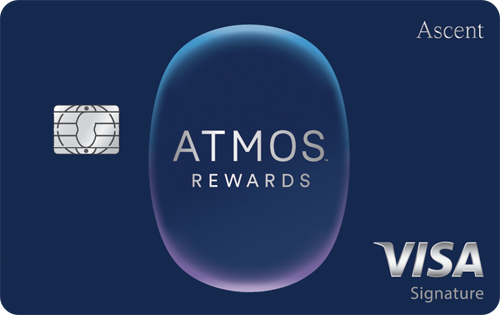
Atmos Ascent vs. Summit: Which Card Fits Your Travel?

Loading article…
Atmos Ascent vs. Summit is mainly a choice between a $95 annual fee and a $395 annual fee. The Atmos™ Rewards Ascent Visa Signature® Credit Card suits travelers who want Alaska or Hawaiian benefits at a lower recurring cost. The Atmos™ Rewards Summit Visa Infinite® Credit Card adds a different companion benefit, lounge passes, and faster status-point earning.
The right card depends on the trips you actually book. A paid companion fare and a points-based companion award are different tools, and neither is automatically worth its advertised maximum. This comparison uses the Milesopedia U.S. card catalog and the official Alaska Ascent and Summit pages checked October 27, 2026. All monetary amounts are U.S. dollars.
Start with the $300 difference in annual fees. Ask whether Summit's extra benefits would save you that amount through travel and spending you already plan. The first-year welcome offer matters, but the renewal decision should stand on the recurring benefits.
Both cards earn Atmos Rewards points. Those points can be used across the program's airline network, subject to available award space and applicable charges. A larger balance does not guarantee a particular seat or itinerary. Our Atmos Rewards program page explains the currency.
| Feature | Ascent | Summit |
|---|---|---|
| Annual fee | $95 | $395 |
| Alaska-channel welcome points | Up to 80,000; $5,000 total in 90 days | 100,000; $6,000 in 90 days |
| Welcome companion benefit | $99 fare plus taxes/fees from $23; $5,000 in 90 days | Separate 25,000-point Global Companion Award; $6,000 in 90 days |
| Recurring companion benefit | $99 fare plus taxes/fees after $6,000 in prior anniversary year | 25,000-point allowance at anniversary; 100,000-point allowance after $60,000 per anniversary year |
| Eligible Alaska/Hawaiian purchases | 3X points | 3X points |
| Main other bonus categories | 2X gas, EV charging, local transit, cable, select streaming | 3X eligible dining and foreign transactions |
| Other eligible purchases | 1X point | 1X point |
| Included Alaska Lounge passes | Not included | 8 annually: 2 per calendar quarter |
| Status points from purchases | 1 per $3 | 1 per $2 |
| Anniversary status-point benefit | Not included | 10,000 status points |
| Foreign transaction fee | None | None |
The offers below are the Alaska Airlines online offers, also recorded in our card catalog. A Bank of America product page, mail offer, or other acquisition channel can show different points and spending thresholds. Read the application disclosures reached from the specific offer you intend to use.
For Ascent, the Alaska channel currently offers:
The second threshold is cumulative. You do not need $3,000 plus another $5,000 to reach the points maximum. However, the welcome companion fare on this channel requires the $5,000 threshold; do not assume it arrives after the first $3,000.
For Summit, the Alaska channel currently offers 100,000 bonus points and a separate 25,000-point Global Companion Award after $6,000 in eligible purchases within the first 90 days. The companion allowance is not another 25,000 freely spendable points added to your account.
These pages describe limited online offers without a fixed end date we can state here. Confirm the offer, eligibility exclusions, and spending window before applying. Do not spend more than planned to obtain a bonus.
Ascent's $95 annual fee is easier to justify with modest use of eligible airline benefits. Summit's $395 annual fee requires a more deliberate plan for its additional benefits. Neither card charges a foreign transaction fee according to the current catalog.
A fee comparison should include what you would pay without the card. If another card or your airline status already provides a benefit, do not count the full value again. Likewise, a lounge you cannot reach during your actual itinerary has little practical value.
Both cards are credit products with interest and payment terms. Check the application disclosures for current APRs and fees. This article compares rewards and recurring benefits, rather than quoting borrowing rates that could differ by applicant or change later.
Ascent's recurring Companion Fare provides a companion ticket with a $99 base fare plus taxes and fees starting at $23. It requires at least $6,000 in purchases during the preceding account anniversary year. The recurring threshold is separate from the welcome-offer threshold.
The official page describes use on eligible Alaska Airlines or Hawaiian Airlines-operated flights within North America, including Hawaii. Review the fare rules and booking conditions before planning a trip around it. This is a paid companion fare, not a $99 statement credit.
Its value depends on the eligible companion ticket you would otherwise buy. For a hypothetical comparable companion fare costing $400 including taxes, a $122 companion ticket would save $278. The $122 assumes the minimum advertised taxes and fees; your itinerary could cost more.
That calculation is not a live flight quote. Compare the total cost for both travelers, cabin restrictions, and available flights. A cheaper alternative itinerary can reduce or eliminate the apparent saving.
Summit's recurring benefit is a 25,000-point Global Companion Award each account anniversary. It applies to eligible award travel for 2 people on the same itinerary, across the program's network and eligible cabins. You use Atmos points for the reservation and apply the companion allowance under its rules.
It is not a general balance of points you can divide among unrelated trips. Treat it as a booking allowance for a companion on a qualifying itinerary. Taxes and applicable carrier charges remain relevant when you compare costs.
If the eligible companion award costs less than the allowance, do not assume the unused portion becomes ordinary points. Read the certificate rules for remaining value, expiration, and booking deadlines. A solo traveler should not assign it the value of a companion trip they will not take.
Summit also offers a 100,000-point Global Companion Award after at least $60,000 in purchases in a card anniversary year. The measurement period matters: an anniversary year is not necessarily January through December.
This is another companion allowance, not 100,000 unrestricted points. Consider the spending needed, the trip for which you would use it, and what the same purchases would earn elsewhere. Reaching the threshold through unnecessary spending defeats the purpose.
For example, compare the actual earnings from moving otherwise planned purchases to Summit with the earnings you would forgo on your existing card. Only then add the value of a companion award you can use. There is no universal cash value for the certificate that makes $60,000 of spending worthwhile for everyone.
Both cards earn 3 Atmos points per dollar on eligible Alaska Airlines and Hawaiian Airlines purchases. Both earn 1 point per dollar on purchases outside their bonus categories. Their everyday bonus categories are the main earning difference.
Ascent earns 2 points per dollar on eligible:
Summit earns 3 points per dollar on eligible dining and foreign transactions, as well as qualifying Alaska and Hawaiian purchases. An overseas restaurant purchase does not receive two separate 3X multipliers. Merchant coding and the issuer's terms determine the applicable category.
For a hypothetical $10,000 of eligible domestic dining spend, Summit earns 30,000 points while Ascent earns 10,000. The difference is 20,000 points. This arithmetic does not assign those points a guaranteed cash value or establish that Summit beats every other dining card.
The official card pages describe a 10% rewards bonus on points from card purchases when you have a qualifying Bank of America account. Verify the eligible account and relationship requirements before including the bonus in your calculation.
Do not confuse this with a 10% rebate on the amount spent or a 10% bonus on every type of Atmos activity. The benefit is tied to qualifying card-purchase points. It does not turn the welcome companion allowance into extra unrestricted points.
A banking relationship can have its own fees and conditions. Opening or retaining an account solely for the bonus deserves a separate cost comparison. Existing eligibility can be useful; an assumed relationship is not a sound basis for valuing either card.
Both cards provide checked-bag and boarding benefits on eligible flights, subject to the airline and payment conditions. The official pages describe benefits for the cardholder and up to 6 guests on the same reservation when the airfare is purchased with the card.
Check the operating carrier, eligible reservation, and current baggage rules before relying on the benefit. A flight sold by a partner is not automatically the same as an eligible Alaska or Hawaiian-operated flight. Authorized-user and guest conditions should also be read in the application terms.
These shared benefits can make Ascent sufficient for travelers whose main concern is baggage. If you already receive checked bags through status or another fare, count only the additional saving the card would actually create.
Summit provides 8 Alaska Lounge day passes a year, distributed as 2 per calendar quarter. That is a quarterly allowance, not unlimited lounge membership and not an annual pool you should assume can be used all at once.
The official page says each pass is valid for the travel day and can cover multiple Alaska Lounge visits during that journey, with entry for up to 2 accompanying children under the applicable terms. Confirm guest rules, locations, and capacity conditions before you travel.
Your useful value depends on the airports and quarters in which you fly. A traveler making one trip every summer cannot automatically count all 8 passes as used. Ascent does not offer the same included quarterly passes in the recurring benefits compared here.
Ascent earns 1 status point for every $3 in purchases. Summit earns 1 status point for every $2 and provides 10,000 status points on each account anniversary. The anniversary deposit should not be treated as an immediate approval bonus.
Status points measure progress toward elite status; they are different from the reward points used to book travel. Earning one type does not mean it can be exchanged for the other. Read our Atmos elite-status guide for thresholds and program changes.
If status affects your decision, start with the flights and status points you already expect to earn. Calculate whether Summit changes the tier you can realistically reach. A faster earning rate has limited value if it does not produce benefits you will use.
Summit's official page includes an airport-security application statement credit of up to $120 every 4 years for eligible Global Entry or TSA PreCheck charges. That period matters: it is not an annual $120 allowance.
It also describes a $50 electronic voucher for an eligible Alaska same-day cancellation or departure delay of at least 2 hours, and a waiver of the same-day confirmed change fee under the stated rules. These have different triggers and should not be treated as unrestricted cash credits.
The partner award-booking fee waiver does not remove all taxes or carrier-imposed surcharges. Check the final award cost. For travel insurance and purchase protection, read the current Guide to Benefits before depending on a coverage, limit, or exclusion; do not infer insurance from the Visa tier alone.
Ascent is a reasonable starting point if you want the shared airline benefits, can use an eligible paid companion fare, and prefer a lower annual fee. The $6,000 recurring spending requirement should fit normal purchases, rather than force extra spending.
Summit deserves the closer comparison if you travel with a companion using points, use Alaska Lounges across several quarters, or can benefit from faster status-point earning. Its higher dining and foreign-purchase rate can also matter when those are substantial spending categories.
For a solo traveler with limited Alaska Lounge use, the companion benefits may contribute little. For someone flying several award trips with a partner, the Global Companion Award may be more useful than Ascent's paid fare. The card name alone cannot settle that difference.
Write down the additional benefits you would use with Summit over Ascent. Exclude benefits common to both cards and those already supplied by your status or another card. Compare that total with Summit's extra $300 annual fee.
Keep cash savings, points earned, companion allowances, and status benefits separate. A self-assigned points value can help model a decision, but it is an assumption. Test a lower value and a year in which you use fewer passes or cannot find the award space you want.
Compare other airline and flexible-points options in our best credit cards guide. Choosing Ascent, Summit, or neither should follow the trips you expect to take and the terms you can meet.
Subscribe to the Milesopedia USA newsletter for changes to Atmos offers and U.S. travel rewards.

Our reviews and rankings are based on an objective assessment. Advertisers do not influence our content. We may receive compensation through some links; our analysis and opinions remain independent.