
Chase Freedom Q4 2026 Categories: 5% on Groceries and Dining

Chase confirmed its Chase Freedom Q4 2026 categories on September 15: grocery stores, dining, and donations to the American Red Cross each earn 5% cash back from October 1 through December 31, 2026. The bonus applies to the first $1,500 in combined spending across the three categories, and it only pays if you activate.
This is one of the more useful fourth quarters Chase has run. Groceries and restaurants are where household spending concentrates between October and the holidays, so the $1,500 cap is far easier to fill than in a quarter built around a single retailer or a seasonal merchant.
What earns 5% from October 1 to December 31
Three categories qualify this quarter, and they share a single spending cap.
| Bonus category | Cash back rate | Key exclusions | Combined quarterly cap |
|---|---|---|---|
| Grocery stores | 5% | Walmart, Target, warehouse clubs | $1,500 across all three categories |
| Dining and restaurants | 5% | None announced by Chase | $1,500 across all three categories |
| American Red Cross donations | 5% | Third-party donation platforms | $1,500 across all three categories |
Anything you spend beyond $1,500 in combined category purchases reverts to the card's ordinary earning rate. On the original Chase Freedom that is 1%. On the Chase Freedom Flex it is 1% outside the card's permanent bonus categories.
Activate before December 14, 2026
Registration opened on September 15, 2026 and closes on December 14, 2026. Chase does not apply the bonus retroactively to purchases you make before you activate, which is the single most common way cardholders lose this money.
Activation is free and takes one click. You can do it in the Chase mobile app, on chase.com, or through the quarterly email Chase sends cardholders. Activating once covers the whole quarter, so there is no reason to wait.
What the 5% is actually worth
Filling the cap returns $75 in a quarter, or $1,500 multiplied by 5%. Measured against the 1% you would otherwise earn on the same spending, the categories are worth $60 in incremental rewards. Across a full year of quarterly categories, that is up to $300 in extra cash back on a card with no annual fee.
The number gets better if you hold a premium Chase card. Cash back earned on a Freedom card is really Ultimate Rewards points at 100 points per dollar, and those points can be moved to a Chase Sapphire Preferred, a Sapphire Reserve, or an Ink card. Once they sit there, they transfer 1:1 to Chase Ultimate Rewards airline and hotel partners. That converts $75 of cash back into 7,500 transferable points, which are worth meaningfully more than $75 when redeemed for premium cabin awards. Run your own numbers with our points calculator before you decide how to redeem.
Groceries: watch the exclusions
Chase excludes Walmart and Target from the grocery category. That exclusion catches people out every quarter, because both retailers sell groceries and many shoppers treat them as supermarkets. Warehouse clubs are generally excluded as well.
- Walmart: excluded by name from the grocery category, in store and online.
- Target: excluded by name, including grocery purchases made inside a Target store.
- Warehouse clubs: Costco, Sam's Club and BJ's code as wholesale clubs, not grocery stores.
- Superstores and supercenters: a supermarket counter inside a general merchandise store normally codes as a superstore.
- Third-party grocery delivery: a delivery service can code as the platform rather than the supermarket, so check how the charge posts.
- Gift card purchases: buying third-party gift cards at a supermarket does not reliably earn the bonus.
The category keys off the merchant category code assigned to the store, not off what ends up in your basket. A supermarket counter inside a superstore normally codes as a superstore, so the purchase earns 1%. If you are unsure about a specific merchant, make a small test purchase early in the quarter and check how it posts before you route serious spending there.
Dining pays more on the Freedom Flex
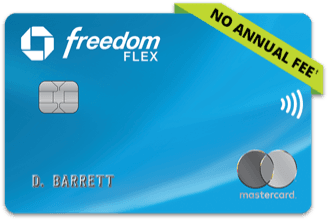
Dining is already a permanent 3% category on the Chase Freedom Flex. The quarterly 5% bonus stacks on the card's base earning rather than replacing it, so restaurant spending in Q4 earns more on the Flex than on the older Chase Freedom, which is no longer open to new applicants.
That distinction matters when you decide which card to carry to dinner. If you hold both, the Flex is the better choice for restaurants once the quarterly cap is in play, and it stays the better choice on dining for the rest of the year.

- Annual fee
- $0
- Our valuation
- $200Milesopedia first-year estimate First-year valueWelcome bonus$200Total$200Rewards on your spending are not included. The calculator that adds them from your own profile is on the card's page.
- Milesopedia first-year estimateFirst-year valueWelcome bonus$200Total$200Rewards on your spending are not included. The calculator that adds them from your own profile is on the card's page.
- Welcome offer
- $200
on Chase's website
American Red Cross donations
Direct donations to the American Red Cross count toward the 5% this quarter, which is unusual for a rotating category. Chase has paired a charitable category with Q4 before, and the logic is the same each time: year-end giving peaks in December.
If a charitable gift was already in your plans, routing it through a Freedom card during the quarter earns 5% on money you were going to give regardless. The donation has to go to the American Red Cross directly rather than through a third-party donation platform, which may code as something else entirely.
How to fit this around a Chase application
If you are also thinking about opening a new Chase card this quarter, check where you stand against the Chase 5/24 rule first. Chase will generally decline your application if you have opened five or more personal credit cards across all issuers in the past 24 months, and the Freedom Flex is subject to that restriction. Our roundup of the best Chase credit cards covers which products are worth an application slot.
Bottom Line
Activate the categories today rather than in December, then push groceries and restaurant spending onto the Freedom or Freedom Flex until you reach $1,500 in combined purchases. Keep Walmart, Target, and warehouse club runs on a different card, because they will not earn the bonus. If you also hold a Sapphire or Ink card, move the rewards over before redeeming so you can transfer them to travel partners instead of taking the cash.
What are the Chase Freedom 5% categories for Q4 2026?
When do I have to activate the Q4 2026 categories?
How much can I earn from the Q4 2026 categories?
Do Walmart and Target count as grocery stores?
Which cards earn the quarterly 5% categories?
Can I turn the cash back into travel points?
Does the $1,500 cap apply to each category separately?
Do donations made through a fundraising platform qualify?

Our editorial integrity
Our reviews and rankings are based on an objective assessment. Advertisers do not influence our content. We may receive compensation through some links; our analysis and opinions remain independent.