
Southwest Companion Pass: How to Earn It and How to Use It (2026)
The Southwest Companion Pass is one of the most valuable perks in U.S. travel because it lets your designated companion fly with you on Southwest for just the taxes and fees when you book an eligible ticket for yourself (paid with cash or points). In this guide, you’ll learn how to earn the Southwest Companion Pass in 2026, what activity counts toward qualification, what does not, and how to actually book and add your companion once you have it.
Quick note: Southwest rules can be very specific about when points post and which points qualify, so it’s important to plan your strategy around statement closing dates and posting timelines, not just when you spend.
What is the Southwest Companion Pass?
The Southwest Companion Pass allows you to choose one companion who can fly with you on Southwest for the cost of mandatory taxes and fees, as long as there’s an open seat. You can use it on flights you book with cash, points, or eligible credits, and you can generally use it as often as you want during the validity window.
In the U.S., taxes and fees are often very low on domestic one-way flights. On international itineraries, taxes can be higher, but it can still be a strong value compared to buying a second ticket.

How to earn the Southwest Companion Pass (2026)
For 2026, you can qualify for the Companion Pass in one of two ways during the same calendar year:
- Fly 100 qualifying one-way flights booked through Southwest, or
- Earn 135,000 Companion Pass qualifying points.
Most people qualify through points because 100 one-way flights is a lot of flying. The key is understanding what counts as Companion Pass qualifying points and what doesn’t.
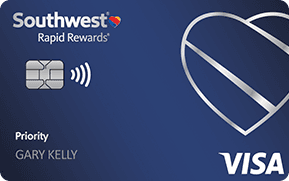

- Annual fee
- $229
- Our valuation
- $750Milesopedia first-year estimate First-year valueWelcome bonus$750Total$750Rewards on your spending are not included. The calculator that adds them from your own profile is on the card's page.
- Milesopedia first-year estimateFirst-year valueWelcome bonus$750Total$750Rewards on your spending are not included. The calculator that adds them from your own profile is on the card's page.
- Welcome offer
- 60,000 points
on Chase's website
What counts toward Companion Pass qualifying points
Companion Pass qualifying points come from a limited set of activities. In general, these do count:
- Qualifying flights flown in 2026: Revenue flights booked through Southwest that meet the program’s definition of “Qualifying Flights.”
- Southwest Rapid Rewards credit card points: Points earned from purchases on eligible Southwest credit cards, including points that post from credit card statements.
- Base points from select partners: For example, eligible partner hotel stays and eligible partner car rentals (as defined by Southwest), plus some online portals and partners that explicitly award qualifying points.
- Annual 10,000-point boost: Members with an open Southwest Rapid Rewards credit card on the first business day of the calendar year receive a 10,000 Companion Pass qualifying point boost each calendar year (one boost per year).
What does not count toward Companion Pass qualification
Many types of points do not help you earn Companion Pass. Common examples include:
- Purchased points: Buying Rapid Rewards points generally does not count.
- Transferred or gifted points: Member-to-member transfers typically do not count.
- Most promotional bonuses: Unless Southwest explicitly designates them as qualifying, promo bonuses often do not count.
- Transfers from other programs: Points transferred in from other programs (for example, bank points transfers) typically do not count.
- Companion Pass travel itself: Flights taken by the companion on a Companion Pass reservation do not earn qualifying points for the companion.
Best strategy: earn it early for maximum value
In many years, Companion Pass is valid for the rest of the year you earn it and the entire following year. That means earning it early in the year usually gives you the longest time to use it.
If you are using credit cards and partner activity to earn qualifying points, the most important planning detail is the difference between:
- Spending date (when you make a purchase), and
- Posting date (when points post to your Rapid Rewards account after your statement closes).
For Companion Pass qualification, points are generally based on when they post to your Rapid Rewards account, not when you spent the money. This matters a lot around December and January if you are trying to keep all qualifying points within the same calendar year.
How to use the Southwest Companion Pass
Using the pass is usually straightforward once your companion is designated:
- Book your own ticket first: Pay with cash, points, or eligible credits.
- Confirm seat availability: Before you add a companion, make sure at least one more seat is still available on the flight.
- Add the companion after booking: In your reservation details, look for an “Add Companion” option and follow the steps to pay taxes and fees.
Once added, your companion’s itinerary is tied to your booking. If you later need to change your flight, you may need to remove the companion first, make the change, and then re-add them (depending on the situation and Southwest’s current tools).
How to book a companion pass flight on Southwest
If your goal keyword is “how to book a companion pass on Southwest,” here is the practical workflow:
- Step 1: Log in to your Rapid Rewards account.
- Step 2: Search and book your own ticket (cash or points).
- Step 3: Open your trip details and choose Add Companion.
- Step 4: Confirm the companion’s information and pay the taxes and fees.
- Step 5: Verify you have both confirmation numbers and that the companion appears in your account.
Common mistakes (and how to avoid them)
Most Companion Pass frustration comes from timing or misunderstandings about qualifying points. These are the most common pitfalls:
- Counting points that don’t qualify: Not all Rapid Rewards points are Companion Pass qualifying points.
- Missing the calendar-year window: Qualifying points generally need to post in the same calendar year to count for that year’s qualification.
- Assuming spending date matters: For credit card points, posting date after statement close is often what matters.
- Waiting too long to add the companion: If the flight is likely to sell out, add the companion sooner rather than later.
Related Milesopedia resources
If you’re building a Southwest strategy, make sure you also review our foundational resources:
Southwest Companion Pass – Frequently Asked Questions
How many points do you need for the Southwest Companion Pass in 2026?
You generally need 135,000 Companion Pass qualifying points in the same calendar year, or 100 qualifying one-way flights. Not all points qualify, so confirm the activity type before assuming it counts.
Do Southwest credit card points count toward Companion Pass?
Yes, points that post to your Rapid Rewards account from eligible Southwest Rapid Rewards credit card spending (and some bonus points, depending on the terms) can count as Companion Pass qualifying points. The important detail is that qualification is typically based on when the points post after your statement closes.
Can you use the Companion Pass on award flights booked with points?
In many cases, yes. You book your own ticket (including with points) and then add your companion for taxes and fees, as long as a seat is available and the reservation is eligible.
How do you add a companion after you book a Southwest flight?
After booking your own ticket, open the trip details (in your account on the website or in the app) and select Add Companion. You will confirm the companion and pay the required taxes and fees.

Our editorial integrity
Our reviews and rankings are based on an objective assessment. Advertisers do not influence our content. We may receive compensation through some links; our analysis and opinions remain independent.