
Air Canada Announces New Transborder Routes for Summer 2026
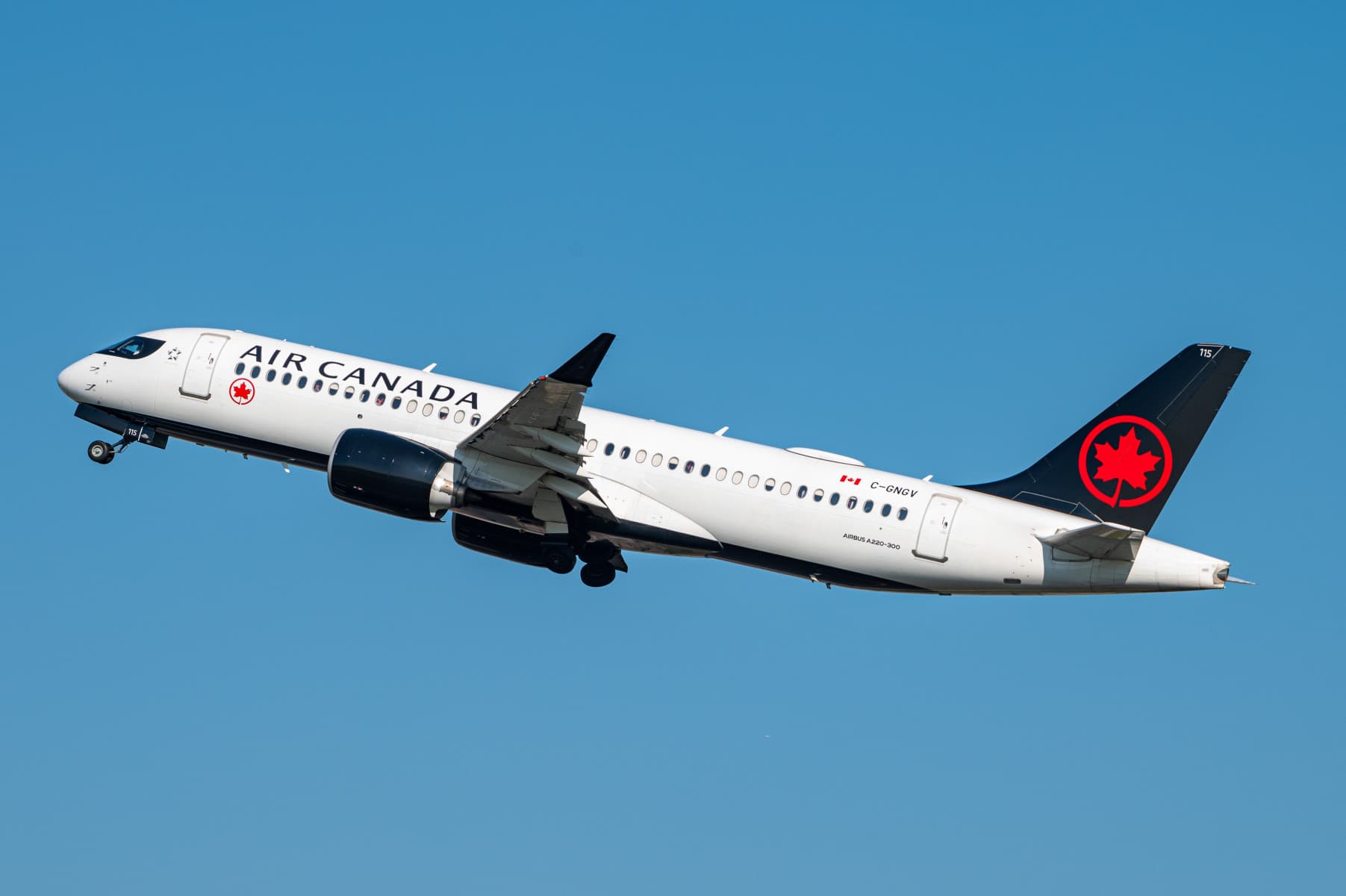
Air Canada has unveiled plans to expand its transborder network for Summer 2026, adding three new seasonal routes connecting Canadian hubs with U.S. destinations. The airline will launch service from Toronto to San Antonio, connecting Montreal with both Cleveland and Columbus, and boosting its overall transborder capacity by 15% compared to Summer 2025.
These new routes, which will operate from May through October 2026, are now available for booking through Air Canada’s website, contact centers, and travel agents.
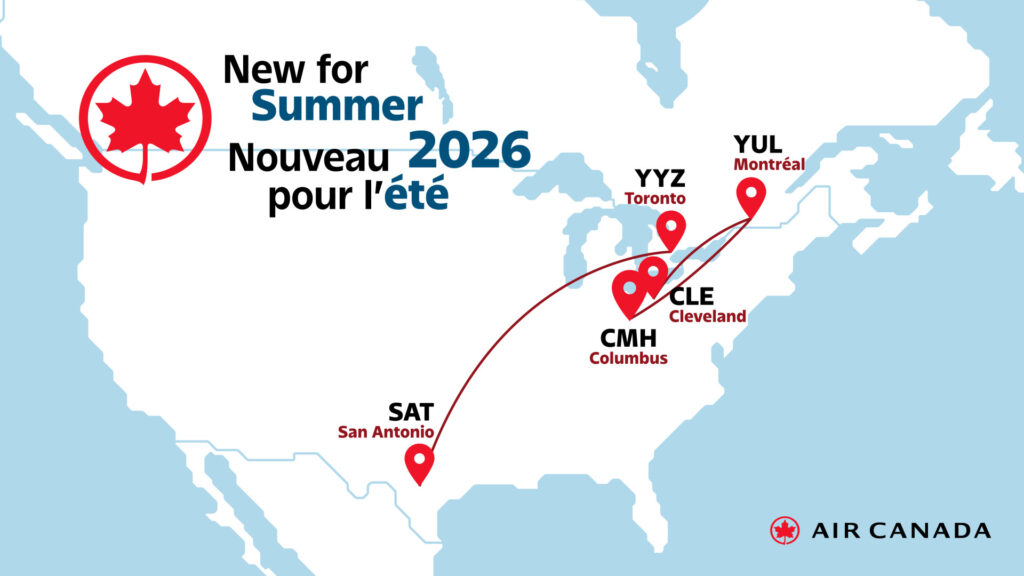
New Route Details
Air Canada is adding three new seasonal transborder routes to its network:
Toronto (YYZ) to San Antonio (SAT)
- Aircraft: Airbus A220-300
- Frequency: 3x weekly (Mondays, Wednesdays, Fridays)
- Start date: May 2026
- End date: October 2026
- Flight times:
- AC1019: Toronto 18:20 → San Antonio 21:00 (Mon, Wed, Fri)
- AC1018: San Antonio 10:30 → Toronto 15:07 (Tue, Thu, Sat)
This route marks Air Canada’s return to San Antonio after previously serving the Texas city until 2020.
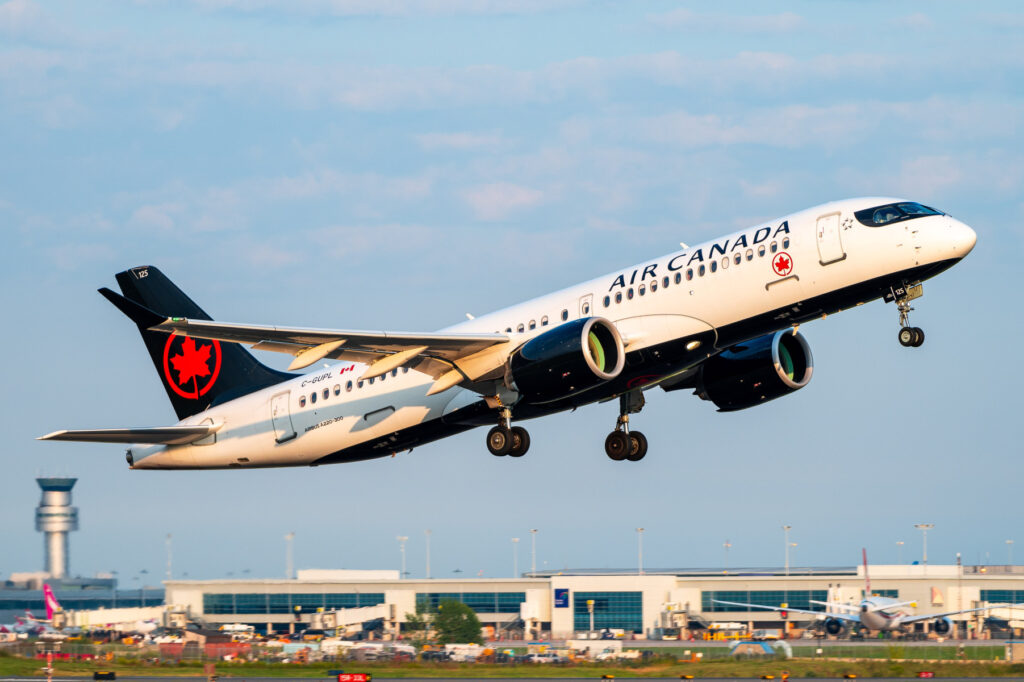
Montreal (YUL) to Cleveland (CLE)
- Aircraft: Embraer E175
- Frequency: Daily service
- Start date: May 2026
- End date: October 2026
- Flight times:
- AC8647: Montreal 16:40 → Cleveland 18:14 (Daily)
- AC8648: Cleveland 14:40 → Montreal 16:25 (Daily)
While Air Canada already serves Cleveland from Toronto, this new route adds direct connectivity to Montreal.
Montreal (YUL) to Columbus (CMH)
- Aircraft: Embraer E175
- Frequency: Daily service
- Start date: May 2026
- End date: October 2026
- Flight times:
- AC8621: Montreal 16:40 → Columbus 18:39 (Daily)
- AC8622: Columbus 14:40 → Montreal 16:22 (Daily)
Similar to Cleveland, Columbus is already served from Toronto but will now gain direct service to Montreal as well.
Strategic Expansion
This expansion comes at an interesting time for U.S.-Canada air travel. Data from the U.S. International Trade Administration shows that the number of Canadians arriving in the U.S. by air was down 11% in the first half of 2025 compared to the same period in 2024.
However, Air Canada’s strategy appears focused less on Canadian leisure travelers and more on:
- Sixth-freedom traffic: Connecting American travelers to international destinations via its Canadian hubs
- Unaligned markets: Targeting midsize U.S. cities without dominant hub carriers
- Network connectivity: Supporting connections to Air Canada’s expanded international network
Air Canada is launching services to San Antonio and linking Columbus and Cleveland to Montreal to support travel between these destinations and points across our global network
– Mark Galardo, Executive Vice President & Chief Commercial Officer, and President, Air Canada Cargo.
The airline plans to boost its overall transborder capacity by 15% in Summer 2026 compared to Summer 2025, bringing it in line with Summer 2024 levels.
Part of Broader International Expansion
These new transborder routes complement Air Canada’s previously announced long-haul expansion for 2026, which includes:
- New service from Toronto to Palma de Mallorca (PMI), Spain
- New service from Toronto to Catania (CTA), Italy
- Resumed service from Toronto to Budapest (BUD), Hungary
- Resumed service from Toronto to Shanghai Pudong (PVG), China
Market Analysis
The three new routes target markets with specific characteristics:
San Antonio (SAT)
- Seventh-largest city in the United States
- Growing business hub with strong tourism appeal
- Limited international connectivity
- Previously served by Air Canada until 2020
Cleveland (CLE) and Columbus (CMH)
- Major Ohio cities with significant business travel demand
- Both are midsize markets without a dominant hub carrier
- Already connected to Toronto but lacking direct Montreal service
- Potential to capture connecting traffic to Europe and beyond
All three cities align with Air Canada’s strategy of targeting “unaligned markets” – mid-sized U.S. cities without a single dominant hub airline – where the carrier believes it can effectively compete while feeding its global network.
Booking Information
These new routes are now available for booking through:
- Air Canada’s website: aircanada.com
- Air Canada Contact Centres
- Travel agents
As these are seasonal routes operating from May through October 2026, travelers planning trips during this period can now secure their seats well in advance.
Implications for Travelers
For U.S. Travelers
- Improved access to Canada: Direct service to Toronto or Montreal from these cities
- Enhanced global connectivity: One-stop service to Europe, Asia, and beyond via Air Canada’s hubs
- Potential for competitive fares: Additional capacity could lead to better pricing on these routes
- Aeroplan opportunities: New options for earning and redeeming Aeroplan points (get more Aeroplan points with the Aeroplan Credit Card – more info here)
For Canadian Travelers
- New destination options: Direct access to San Antonio from Toronto
- Additional Ohio connections: New Montreal service to Cleveland and Columbus
- Star Alliance benefits: Seamless connections with United Airlines and other partners
- Business travel options: Enhanced schedules for corporate travelers
Bottom Line
Air Canada’s announcement of three new transborder routes for Summer 2026 represents a strategic expansion focused on connecting midsize U.S. markets to its global network via Canadian hubs. Despite recent declines in Canadian leisure travel to the U.S., the airline appears to be positioning itself to capture American travelers looking for convenient connections to international destinations.
The new routes to San Antonio, Cleveland, and Columbus complement Air Canada’s broader international expansion for 2026, which includes new and resumed service to European and Asian destinations. This network growth aligns with the carrier’s stated strategy of targeting “unaligned markets” where it believes it has a competitive advantage.
For travelers in these markets, the new routes offer improved connectivity and potentially more competitive options for both direct travel to Canada and one-stop service to global destinations via Air Canada’s extensive international network.
Frequently Asked Questions
When will these new Air Canada routes begin operating?
All three new routes – Toronto to San Antonio, Montreal to Cleveland, and Montreal to Columbus – will begin operating in May 2026. They are seasonal services that will run through October 2026. The exact start date in May has not been specified in Air Canada’s announcement, but flights are already available for booking through Air Canada’s website, contact centers, and travel agents.
What aircraft will Air Canada use on these new routes?
Air Canada will operate the Toronto (YYZ) to San Antonio (SAT) route using an Airbus A220-300 aircraft. This modern narrow-body jet offers a two-class configuration with both Business Class and Economy Class seating.
The Montreal (YUL) to Cleveland (CLE) and Montreal (YUL) to Columbus (CMH) routes will both be operated with Embraer E175 aircraft. These regional jets are typically operated by Air Canada Express and feature a two-class cabin with Business Class and Economy Class seating.
How frequently will these flights operate?
The frequency of service varies by route:
• Toronto (YYZ) to San Antonio (SAT): Three times weekly, operating on Mondays, Wednesdays, and Fridays from Toronto, and Tuesdays, Thursdays, and Saturdays from San Antonio
• Montreal (YUL) to Cleveland (CLE): Daily service in both directions
• Montreal (YUL) to Columbus (CMH): Daily service in both directions
All routes are seasonal and will operate from May through October 2026.
Can I earn and redeem Aeroplan points on these new routes?
Yes, as these are Air Canada-operated flights, you will be able to earn and redeem Aeroplan points on all three new routes. The specific earning rates will depend on the fare type purchased and your Aeroplan elite status level.
For redemptions, these routes will follow Air Canada’s standard Aeroplan award chart for flights between Canada and the United States. Typically, short-haul flights between the U.S. and Canada start at 6,000 Aeroplan points one-way in economy class, with actual rates varying based on distance and demand.
As a member of the Star Alliance, Air Canada also allows you to earn and redeem miles with partner airline programs, such as United MileagePlus or any other Star Alliance member program.
How does this expansion fit into Air Canada’s overall strategy?
This expansion aligns with Air Canada’s stated strategy of focusing on “unaligned markets” – midsize U.S. cities without a dominant hub carrier. The airline is targeting these markets for several strategic reasons:
1. Sixth-freedom traffic: Air Canada aims to capture American travelers connecting through its Toronto, Montreal, and Vancouver hubs to destinations in Europe, Asia, and beyond
2. Network connectivity: These new routes complement Air Canada’s expanded international network, including new service to Palma de Mallorca and Catania, and resumed service to Budapest and Shanghai
3. Competitive advantage: In markets without a dominant carrier, Air Canada believes it can effectively compete while leveraging its global network
4. Diversification: By focusing on connecting U.S. passengers to international destinations, Air Canada is less dependent on the Canadian leisure market to the U.S., which has seen recent declines
This approach is part of a broader plan announced earlier in 2025 to add up to 15 new U.S. airports to grow connectivity over Air Canada’s hubs.
Will these flights offer connections to international destinations?
Yes, these flights are specifically designed to offer convenient connections to international destinations through Air Canada’s hubs in Toronto and Montreal. The timing of these flights allows for connections to:
From Toronto (YYZ):
• European destinations including London, Paris, Frankfurt, Rome, and Air Canada’s new 2026 destinations like Palma de Mallorca and Catania
• Asian destinations including Tokyo, Hong Kong, and the resumed service to Shanghai
• South American destinations including São Paulo and Buenos Aires
• Caribbean and Mexico destinations
From Montreal (YUL):
• European destinations including Paris, Brussels, Geneva, and various French cities
• North African destinations including Casablanca and Algiers
• Middle Eastern destinations including Beirut and Tel Aviv
• Caribbean destinations
The flight schedules are designed to facilitate these connections, making these new routes particularly valuable for travelers looking to reach international destinations with just one stop.
Has Air Canada served these markets before?
Air Canada’s history with these three markets varies:
San Antonio (SAT): Air Canada previously operated service between Toronto and San Antonio until 2020, when the route was suspended during the COVID-19 pandemic. The Summer 2026 service represents a return to this market after a six-year absence.
Cleveland (CLE): Air Canada currently serves Cleveland from Toronto Pearson Airport. The new Montreal-Cleveland route adds a second Canadian gateway for Cleveland travelers but is not an entirely new market for Air Canada.
Columbus (CMH): Similar to Cleveland, Air Canada already operates service between Toronto and Columbus. The new Montreal-Columbus route expands Air Canada’s presence in this market rather than representing an entirely new destination.
This pattern of expansion shows Air Canada building on existing market knowledge while expanding connectivity to its Montreal hub.

Our editorial integrity
Our reviews and rankings are based on an objective assessment. Advertisers do not influence our content. We may receive compensation through some links; our analysis and opinions remain independent.