Chase Sapphire Preferred Welcome Offer: 75,000 Points

Loading article…
As of October 26, 2026, the public offer for the Chase Sapphire Preferred® Card is 75,000 bonus points after $5,000 in purchases in the first 3 months from account opening. The annual fee is $95. Check the eligibility rules and how you plan to redeem the points before applying.
This guide explains the spending requirement, current redemption options, and the costs to compare. The offer and benefits were checked against Chase’s official Sapphire Preferred page; offers can change and approval does not guarantee eligibility for the bonus.
on Chase's website
As checked on October 26, 2026, eligible new cardholders can earn 75,000 Ultimate Rewards points after $5,000 in purchases within the first three months from account opening. The annual fee is $95. Check Chase’s current application terms before applying.
At Chase Travel’s standard rate of 1 cent per point, 75,000 points cover $750 of travel. Subtracting the $95 annual fee leaves $655 for this bonus-only illustration, before counting rewards on spending, credits, taxes or other costs. Eligible Points Boost bookings or partner transfers may produce a different value; they are not guaranteed cash payouts.

The exceptional value of Chase Ultimate Rewards points comes from their flexibility. Here are the two primary ways to redeem your points:
Ultimate Rewards points can be transferred to 14 airline and hotel partners. Transfers are 1:1 for 13 of them. The exception is World of Hyatt: for new cardholders who apply on or after June 15, 2026 (and for existing cardholders starting October 1, 2026), the Sapphire Preferred transfers to Hyatt at a 4:3 ratio, so 40,000 Chase points become 30,000 Hyatt points. The 14 partners are:
When transferred strategically, your 75,000 points could be worth significantly more than their face value. For example, transferring to World of Hyatt could get you multiple nights at luxury properties, while transferring to airline partners could help you book business class flights that would otherwise cost thousands of dollars.
Aeroplan’s Hyatt Free Night Awards are another option to compare for members with linked accounts. Air Canada advertises awards starting at 25,000 Aeroplan points. Check the current certificate category, points price, expiry and room availability before transferring. For example, a night requiring 20,000 Hyatt points needs a transfer of 27,000 Chase points at 4:3 in 1,000-point increments, yielding 20,250 Hyatt points. If a suitable certificate is available for 25,000 Aeroplan points, a 1:1 Chase transfer would use 2,000 fewer Chase points. This is a conditional comparison, not a guaranteed saving on every stay.
With the Chase Sapphire Preferred, your points are worth 1 cent each when redeemed through Chase Travel, so your 75,000-point bonus covers $750 of flights, hotels, car rentals and more, without having to worry about award availability or transfer times. With Points Boost, points are worth up to 1.5x on top-booked hotels and flights with select airlines, which would bring the same 75,000 points to as much as $1,125 on those bookings.
This redemption option provides a solid floor value for your points while offering the simplicity of booking just like you would through any online travel agency.
Before applying, it’s important to understand Chase’s eligibility requirements for this welcome bonus. According to the official language in the application:
“This credit card is unavailable to you if you currently have this card open. The new cardmember bonus may not be available to you if you previously held this card or received a new cardmember bonus for this card. We may also consider the number of cards you have opened and closed in determining your bonus eligibility.”
Breaking down these restrictions:
Additionally, Chase has implemented a helpful feature that will notify you during the application process if you’re not eligible for the welcome bonus, before any hard credit inquiry is performed.
Beyond the Sapphire-specific restrictions, Chase generally won’t approve applications for new credit cards if you’ve opened 5 or more personal credit cards across all banks in the past 24 months (known as the “5/24 rule“). However, there have been increasing reports of exceptions to this rule, with some applicants being approved despite being over the 5/24 threshold.

The $95 annual fee is an ongoing cost. Compare it with the rewards and benefits you expect to use, taking account of spending limits, exclusions and activation requirements.
The Sapphire Preferred offers one of the most competitive earning rates in its category:
Cardholders receive a statement credit of up to $100 each account anniversary year for hotel stays purchased through the Chase Travel Portal. Chase doubled this credit from $50 to $100 in June 2026, so it now exceeds the entire $95 annual fee. There is no minimum stay or spending threshold; you simply book and prepay a hotel stay through Chase Travel with the card.
As of June 2026, the Sapphire Preferred adds a statement credit of up to $120 every four years to cover the application fee for Global Entry, TSA PreCheck or Nexus. That makes it one of the lowest-annual-fee cards to offer a benefit usually reserved for premium travel cards. If you already hold one of these memberships, you can use the credit for a friend or family member’s application instead.
Sapphire Preferred cardholders can also activate a complimentary one-year Apple TV subscription. Link your Apple Account to your card through the Benefits & Rewards section of your account and activate the offer by December 31, 2026.
The Sapphire Preferred offers some of the best travel insurance benefits available on a mid-tier credit card:
These protections can provide significant peace of mind and potential savings when traveling, especially considering that standalone travel insurance policies often cost more than the card’s annual fee.
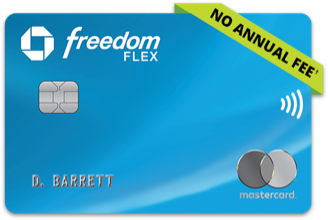
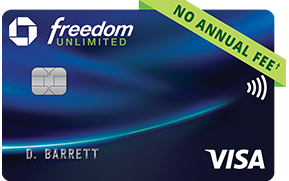
The Sapphire Preferred serves as an excellent foundation for a multi-card strategy within the Chase Ultimate Rewards ecosystem. When paired with no-annual-fee cards like the Chase Freedom Flex℠ or Chase Freedom Unlimited®, you can transfer points earned on those cards to your Sapphire Preferred account, where they gain access to transfers to airline and hotel partners and to Points Boost redemptions (up to 1.5x on select bookings through Chase Travel).
| Credit card | Annual fee | Welcome offer | |
|---|---|---|---|
| $0 | |||
| $0 | |||
| $95 |
To provide context for this offer, let’s compare the Sapphire Preferred to some of its main competitors:
| Card | Welcome Bonus | Annual Fee | Key Benefits |
|---|---|---|---|
| Chase Sapphire Preferred® | 75,000 points after $5,000 spend in 3 months | $95 | Points Boost up to 1.5x, transfer partners, up to $100 hotel credit |
| Capital One Venture Rewards | 75,000 miles after $4,000 in purchases in 3 months; a separate $300 Capital One Travel Stays credit is available in the first cardholder year. | $95 | 2X miles on all purchases, transfer partners |
| Citi Strata Premier® Card | 60,000 points after $4,000 spend in 3 months | $95 | 3X on restaurants, supermarkets, gas stations, air travel, hotels |
| American Express® Gold Card | As high as 100,000 points after $8,000 spend in 6 months | $325 | 4X at restaurants worldwide (up to $50,000/year) and U.S. supermarkets (up to $25,000/year), dining credits |
Comparison checked on October 26, 2026. See our Venture Rewards review, Citi Strata Premier review and Amex Gold review, together with the current terms from Capital One, Citi and American Express. The Gold offer varies by applicant; the advertised maximum is not guaranteed.
While each card has its strengths, the Sapphire Preferred‘s combination of a strong welcome bonus, reasonable annual fee, flexible redemption options, and comprehensive travel protections makes it a compelling choice for many travelers.
If you decide to apply for the Sapphire Preferred with its 75,000-point bonus, here are some strategies to get the most value from your card:
The 75,000-point welcome offer is worth considering if you qualify for the bonus, can meet the $5,000 spending requirement without carrying an interest-bearing balance, and plan to use the rewards. Compare the $95 annual fee with the benefits you will actually use; an advertised maximum redemption value should not drive the decision by itself.
Beyond the initial bonus, the card’s strong earning structure, valuable redemption options, and comprehensive travel benefits make it a worthy addition to most travelers’ wallets. The ability to transfer points to airline and hotel partners or redeem them at an enhanced value through the Chase Travel Portal provides flexibility that few other cards in this price range can match.
If you’ve been considering the Chase Sapphire Preferred, this enhanced welcome offer presents an ideal opportunity to apply, especially if you qualify under Chase’s eligibility requirements. As with any credit card, be sure to consider how it fits into your overall financial strategy and travel goals before applying.
on Chase's website
Chase has not specified an end date for this offer. Check the current amount and terms on the issuer’s application page when you are ready to apply. Apply only if the card fits your needs and you can meet the required spending without unnecessary purchases.
Having previously held the Sapphire Reserve does not by itself establish eligibility for the Preferred bonus. Chase’s current Preferred terms exclude applicants who currently hold the card, say the bonus may be unavailable to previous cardholders or bonus recipients, and allow Chase to consider the number of accounts opened and closed. Review the offer shown for your application; credit approval and bonus eligibility are separate decisions.
Chase typically won’t approve applications if you’ve opened 5 or more personal credit cards (across all banks) in the past 24 months. To check your 5/24 status, count how many personal credit cards you’ve opened in the last two years. If you’re at or over 5, approval may be difficult, though there have been recent reports of exceptions to this rule.
Yes, you may be able to product change to the Sapphire Preferred from another Chase card (like the Freedom or Freedom Unlimited), but you would not be eligible for the welcome bonus. Product changes are typically available if your current Chase card has been open for at least one year.
The Sapphire Reserve offers premium benefits like Priority Pass lounge access, a $300 travel credit, a higher Points Boost ceiling (up to 2x vs. up to 1.5x), and better earning on travel and dining, but comes with a much higher $795 annual fee. The Preferred is generally better for moderate travelers who want strong benefits without a premium annual fee, while the Reserve is designed for frequent travelers who can maximize its premium perks. One more distinction after Chase’s June 2026 changes: the Sapphire Reserve keeps 1:1 transfers to World of Hyatt, while the Sapphire Preferred moves to a 4:3 ratio, so travelers who transfer heavily to Hyatt may prefer the Reserve.
Yes, the “Chase trifecta” strategy involves pairing the Sapphire Preferred with the Freedom Flex (for its rotating 5% categories) and the Freedom Unlimited (for its 1.5% on non-bonus spending). Points earned on the Freedom cards can be transferred to your Sapphire Preferred account, where they gain additional value for travel redemptions or transfers to partners.

Our reviews and rankings are based on an objective assessment. Advertisers do not influence our content. We may receive compensation through some links; our analysis and opinions remain independent.